Free Games: From Five-Minute Distractions to Rich Worlds
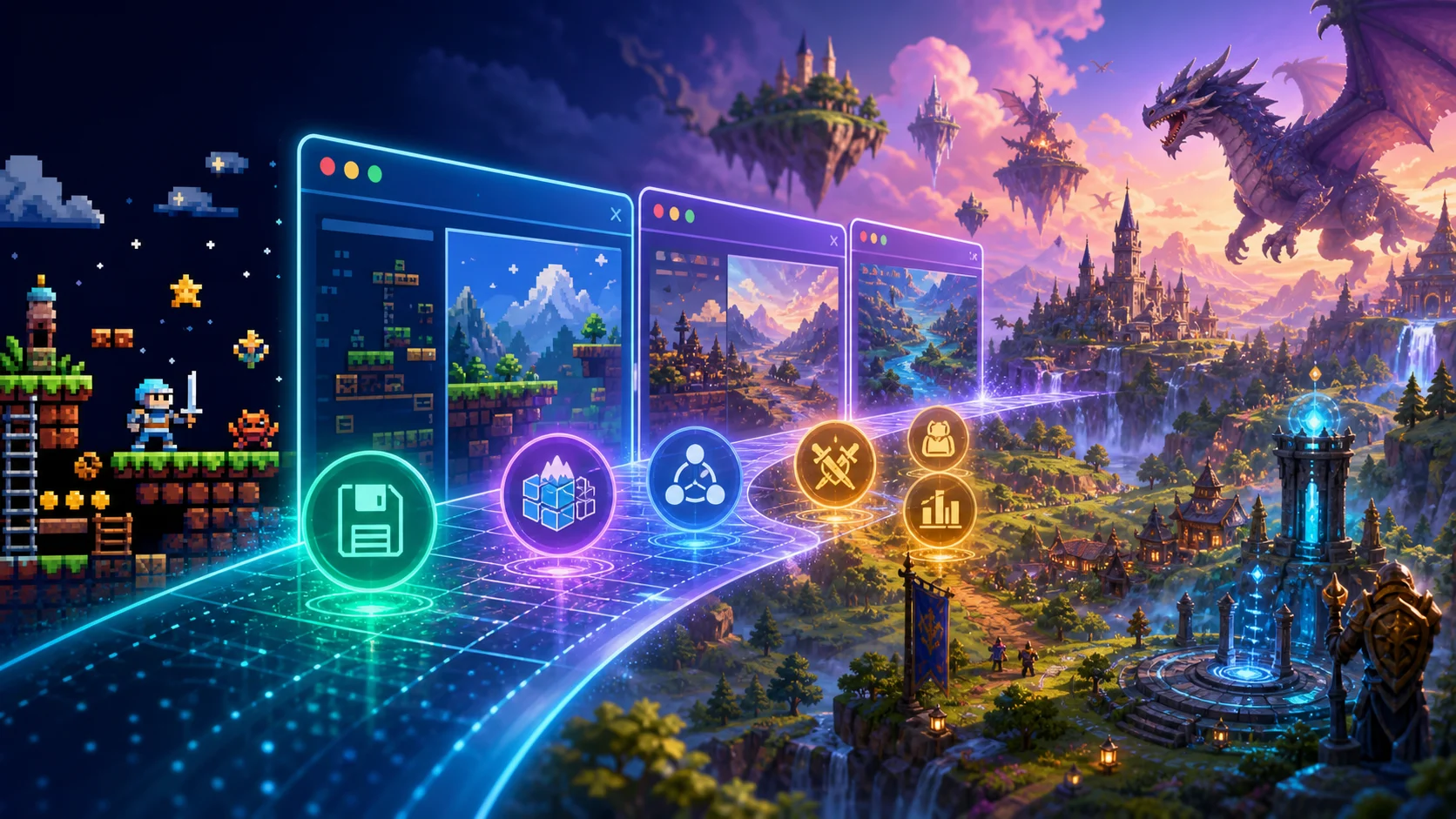
If you spent any time on a computer two decades ago, searching for Free Games back in 2005 meant landing on chaotic websites packed with loud banner ads and broken media plugins. Most of those old experiences were charming, but they were undeniably simple. You beat a quick maze, bounced a ball around a tiny screen for ten minutes, or solved a brief puzzle before running out of content entirely. Today, stepping into a web browser feels closer to opening a dedicated gaming console, offering massive worlds and intricate systems that keep players coming back for months.
The Fragile Era of Early Web Play
Back in the late 1990s and early 2000s, playing something inside a web browser was a test of patience. Dial-up or early broadband connections struggled to pull down even tiny assets, so creators had to keep their files ridiculously small. Most early Browser Games felt more like interactive digital toys than full releases. You might spend five minutes dressing up a cartoon character, firing a ragdoll out of a cannon, or guiding a mouse cursor through a wireframe maze. Once you reached the end, there was nothing left to do except refresh the page or look for a different link.
These experiences were fun precisely because they were so brief and random, fitting neatly into quick school computer lab sessions or work breaks. However, they lacked any real depth or permanence. If your browser crashed or someone picked up the home phone and cut off your internet connection, your entire session vanished instantly. Reliable save files and account-based progress were uncommon, so closing the tab could mean starting over. You simply enjoyed the quick distraction for what it was, knowing it would be over in less than an hour.
Why Old Web Projects Never Lasted Very Long
The short lifespan of early web titles was not just a design choice; it was also a hard technical limitation. Early web browsers were not optimized to run complex code or render demanding graphics. Creators relied heavily on third-party plugins that regularly choked on memory, crashed without warning, and created endless security headaches. To keep things from breaking down completely, developers had to keep their scope tiny. Game loops stayed basic, visual assets were kept low-resolution, and level design rarely extended beyond a handful of static screens.
Storage was another major hurdle that kept these titles small. Before browser storage and account-based saves became common, long adventures were harder to design around persistent progress. Designing a ten-hour campaign made zero sense when players had to finish the entire thing in a single sitting before closing their tab. As a result, the early ecosystem of Free Games focused almost entirely on high-score chasers, quick arcade survival loops, and simple point-and-click escape rooms that you could finish before your lunch break ended.
Tech Upgrades That Transformed What Browsers Can Run
Everything changed when web standards evolved to support media natively. As old browser plugins were officially phased out, web browsers gained built-in engines capable of handling hardware-accelerated graphics directly. Today, modern HTML Games run natively inside open tabs without requiring extra downloads, software drivers, or third-party add-ons. Browser APIs can use CPU resources and hardware-accelerated graphics to render smooth frame rates and detailed environments that were once impractical on the web.
This technical leap raised the old performance ceiling considerably. Instead of being restricted to simple vector animations, creators can now build sprawling three-dimensional spaces, simulate realistic lighting, and process complex audio channels. Modern browsers also manage memory more efficiently, although long sessions still depend on how carefully a game handles assets and background tasks. The browser is no longer a clumsy container for basic animations; it is now a capable platform for substantial interactive entertainment.
Deep Mechanics Replacing Quick Novelty Loops
Because the underlying tech is so much stronger today, game design on the web has undergone a massive transformation. Modern browser releases are no longer limited to ten-minute gimmick loops. Instead, you can find full-length role-playing adventures, deep strategy simulators, and intense multiplayer shooters that demand actual strategy and long-term planning. Players can lose themselves in complex crafting systems, manage virtual cities over several weeks, or team up with friends to tackle tactical dungeon raids right inside Chrome or Firefox.
This shift toward deeper mechanics has completely changed how people view web-based gaming. Players no longer treat browser tabs as desperate last resorts when they are bored at work. Instead, these experiences command real attention and respect alongside traditional console and PC releases. You can sink fifty hours into a well-crafted browser title, exploring rich skill trees and mastering intricate combat systems that offer just as much substance as a forty-dollar boxed game sitting on a store shelf.
Clever Systems That Make Web Games Endless
Building every single map by hand just isn't realistic when a single person is making an Indie Game. To get around that bottleneck, creators set up randomized rules that shuffle floor plans, enemy spawns, and weapon drops every time you hit start. You might start a run at 2 PM, lose your character ten minutes later, and immediately jump into a level that looks completely different. That constant element of surprise turns basic mechanics into something you can replay for a month straight without getting bored.
Instant server updates also change the math on how long these projects live. Big console releases make you sit around waiting for giant patch downloads whenever something gets updated. On the web, a creator can tweak balance numbers, launch a seasonal event, or drop a whole new area during a quiet afternoon. You just reload your open browser tab and the latest version is right there waiting for you, which makes searching for great Free Games feel like an ongoing discovery rather than a one-off distraction.
- Randomized level generators keep fresh runs feeling unpredictable every single time.
- Small developers can stretch a simple project into dozens of hours of replay value.
- Bug fixes and new features arrive the second you reload your web browser tab.
- Players never have to wait on massive download progress bars just to try an update.
Saving Progress and Staying Connected
Modern web storage and cloud integration have made persistent progress far more reliable. APIs such as localStorage and IndexedDB allow games to save inventory, quest progress, and character stats on the device without a large installation. Furthermore, cloud saves and lightweight account systems mean you can start playing a strategy game on your desktop computer at home and seamlessly pick up right where you left off on your mobile phone during your morning commute.
Multiplayer functionality has also experienced a massive upgrade on the web. Old browser titles were almost strictly single-player experiences, or at best offered clunky turn-based interactions. Technologies such as WebSockets can support real-time multiplayer, although player capacity and latency still depend on the game's architecture and network conditions. Whether you are competing in a massive battle royale match or collaborating with teammates to build a shared virtual world, well-designed browser games can now offer social features comparable to those on dedicated gaming platforms.
The Bright Future of Web Gaming
Looking back at where web gaming started makes its current state feel almost miraculous. We moved from fragile, ten-minute Flash novelties that broke whenever a browser updated to persistent, beautifully rendered worlds that load in a heartbeat. As web standards adopt more capable graphics tools and processing pipelines, the gap between installed software and browser games will continue to narrow for many genres.
This constant progress ensures that the world of Free Games shows no signs of slowing down anytime soon. Players can look forward to even richer worlds, smarter artificial intelligence behaviors, and smoother cross-device compatibility in the coming years. The humble web browser has proven itself to be one of the most flexible and resilient gaming platforms on earth, proving that incredible entertainment does not require heavy hardware or expensive price tags.